

The City of Riverside adopts a biennial (two-year) budget with a five-year planning process to identify how we will invest in services, programs, and infrastructure for our community. This approach provides a long-term outlook on the city’s finances through a thorough examination and thoughtful planning, with more opportunities to connect our spending with long-term priorities. Furthermore, this process also provides the flexibility to adapt to changing circumstances, respond to emerging needs, and implement long-term strategies.
The city budget is more than numbers—it’s a plan that guides how we invest in our neighborhoods, public safety, parks, roads, libraries, and other essential services and sets strategic priorities developed in the context of a comprehensive five-year financial plan. Through the budget and five-year financial planning process, the City of Riverside strives to promote transparency, taxpayer accountability, and fiscal strength.

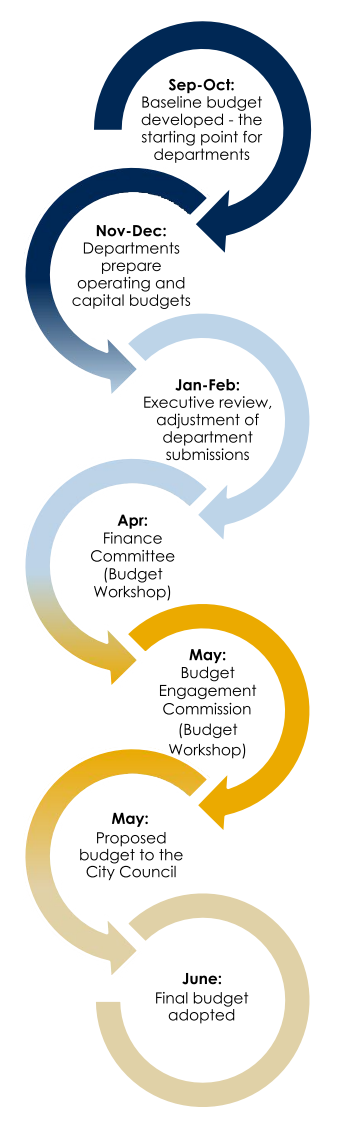
The Budget Cycle initiates during the summer when City departments work internally to begin identifying potential priority needs for the upcoming biennial budget. In September, the city’s Budget Office develops the baseline budget, which generally includes updated revenue assumptions and required expenditure adjustments (e.g. changes in personnel, insurance, and debt service costs) for existing levels of service.
During the months of October and November, the city conducts community budget forums in each Ward to obtain feedback and hear what matters most to residents. Click here to learn more about meeting dates, times, and locations for community budget engagement meetings as part of the 2026-2028 Biennial Budget development process.
To view meeting agendas and material, please go
to our City of Riverside Calendar page:
City of Riverside - Calendar
Materials should be posted 12 days prior to the
respective meetings.
>> View the Community Forum<<
Between November and February, City Departments work with the City Manager’s Office to finalize proposed operating and capital budget that aim to address priority needs identified by the departments and through community engagement, while being mindful of any fiscal limitations.
In March, the City releases the draft biennial budget with a five-year financial plan and conducts additional engagement with various city boards, commissions, and committees. The proposed budget is presented to City Council in May and adopted in June.
| Date | Time | Meeting Body | Subject |
|---|---|---|---|
| April 9, 2026 | 5:00 P.M | Budget Engagement Commission | General Fund/ Measure Z Budget Workshop |
| April 13, 2026 | 5:00 P.M | Board of Library Trustees | Library Preliminary Budget |
| April 13, 2026 | 6:30 P.M | Board of Public Utilities | Public Utilities Preliminary Budget |
| April 20, 2026 | 1:00 P.M | Finance Committee | Budget Workshop |
| April 22, 2026 | 3:00 P.M | Museum of Riverside Board | Museum Preliminary Budget |
| May 14, 2026 | 9:00 A.M | Planning Commission | Proposed CIP Conformance to General Plan |
| May 14, 2026 | 5:00 P.M | Budget Engagement Commission | Proposed Budget |
| May 18, 2026 | 6:30 P.M | Park & Recreation Commission | Park, Recreation, & Community Services Department Preliminary Budget |
| May 19, 2026 | Afternoon | City Council | Proposed Budget |
| June 23, 2026 | Evening | City Council | Final Budget Adoption |
In developing the budget, the City utilizes a Priority Based Budgeting methodology that focuses on aligning financial resources with an organization's strategic priorities and goals. Instead of relying only on traditional budgeting methods that may be based on historical spending patterns or incremental adjustments, priority-based budgeting seeks to allocate resources based on the importance of various programs, services, or initiatives. As such, PBB employs an open and transparent process to ensure city funding is allocated to community priorities as expressed by City Council, the Mayor, as well as residents that are invited to participate and make their voices heard. Using this information, the City will reallocate resources from low-alignment programs to high-alignment programs, while also addressing existing critical needs and fiscal challenges.
For more information on the budget, click on each expandable section below:
The City's Operating Budget is a flexible spending plan which serves as the legal authority for departments to commit financial resources. The budget sets forth a strategic resource allocation plan that addresses the City Council’s Strategic Goals. The Budget is a policy document, financial plan, operations guide, and communication device all in one. Through this document, the City demonstrates accountability to its residents, customers, and community-at-large.
The operating budget details the funding for the day-to-day operations and obligations of the City for each specific fiscal year, including costs for personnel, vendors and contractors, utilities, building maintenance, and debt payments. Every effort has been made to present the budget document in a user-friendly format with emphasis on trends and written explanations.
The City of Riverside prepares a CIP document, which is different from the Operating Budget document, but the two are closely linked. The CIP is used as a planning tool to align capital project requirements to the financial sources that will support their realization and the timeframe in which both financing and work will take place. The first two years of the CIP are referred to as the capital budget and consist of the planned expenditures for the first two fiscal years in the CIP. The Capital Budget is part of the Biennial Budget, which appropriates funds for specific programs and projects.
A capital project typically involves the purchase or construction of major fixed assets such as land, buildings and any permanent improvement including additions, replacements and major alterations having a long life expectancy. Additionally, capital projects may apply to:
Generally, only those items costing $20,000 or more are considered as capital projects. For informational purposes, capital projects are also referred to as capital facilities, CIP projects and capital improvement projects. The five-year CIP is reviewed annually to enable the City Council to reassess projects in the program.
On an annual basis and in conjunction with the budget process, the Budget Office compiles all active and previously approved fees and charges into a single publication titled “Schedule of Fees and Charges”. Following Council review in June, the updated schedule is made available to the public via the City’s website at: Fees & Charges Page
If new fees or revisions to existing fees are requested by City departments during this same timeframe, those requests are presented at a public hearing conducted by the City Council; if approved by the City Council, the fees are added to the Schedule of Fees and Charges.
The FY 2022/23 Master Fees and Charges Schedule includes all fees and charges previously approved by Council action or proposed for approval through May 17, 2022, and excludes fees no longer being charged.
The City’s Operating Budget and Capital Improvement Program documents, in partnership with the City’s Budget Transparency Portal ,advances our commitment to be more transparent and accountable to the Riverside community. These valuable tools aid the community’s understanding of the infrastructure priorities, successes and challenges that face our City in the upcoming fiscal cycle.
Throughout the fiscal year, the Budget Office prepares and presents quarterly Financial reports to the Budget Engagement Commission and City Council. These reports detail the year-to-date financial performance of the City’s major funds (General Fund, Measure Z, Electric, Water, Refuse, and Sewer) and summarize the year-to-date financial activity of items funded by Measure Z. At that time, the community learns about areas of fiscal concern that may influence the City’s financial health as well as budget adjustments or supplemental appropriations that may be recommended and approved. The community can learn about the budget, quarterly reports and other areas of the City’s finances by attending meetings of the Budget Engagement Commission, Financial Performance and Budget Committee, and City Council either in person or online, or watching recordings of past meetings.