
The Riverside Police Department's Traffic Education Unit was established in 1997 to reduce injury and death due to traffic collisions.
The Riverside Police Department has been recognized as a leader in the area of Traffic Education. RPD was one of the first programs in Southern California with a full time dedicated coordinator.
The Traffic Education Unit is supported by state and local grants as well as partnerships with local groups and businesses. The Traffic Education Unit has taken a pro-active step to educate the citizens of our community and provide many programs in traffic safety.
Use of Public Roadways by Motorcycles, Scooters, Mopeds and similar devices
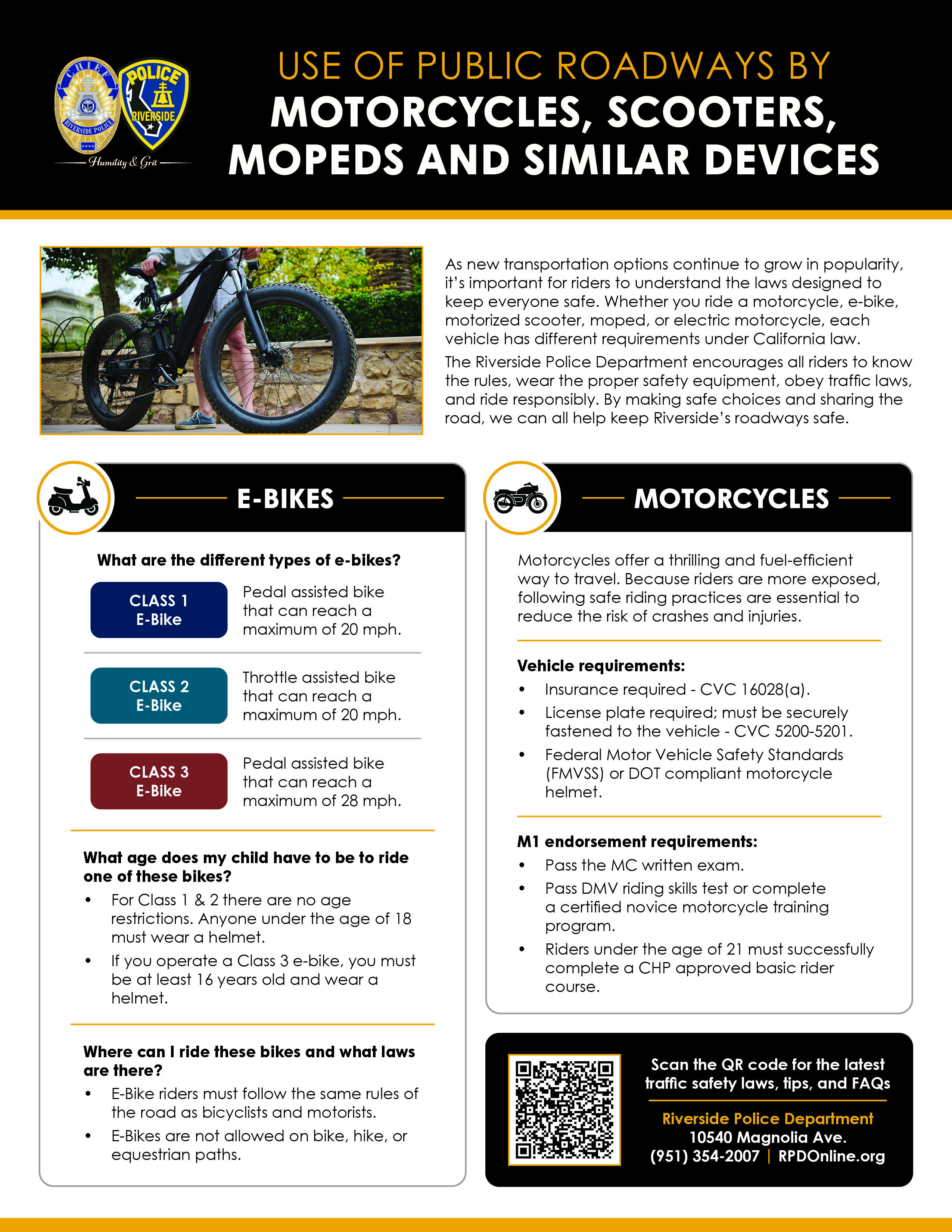
As new transportation options continue to grow in popularity, it’s important for riders to understand the laws designed to keep everyone safe. Whether you ride a motorcycle, e-bike, motorized scooter, moped, or electric motorcycle, each vehicle has different requirements under California law.
The Riverside Police Department encourages all riders to know the rules, wear the proper safety equipment, obey traffic laws, and ride responsibly. By making safe choices and sharing the road, we can all help keep Riverside’s roadways safe.
Download The Flyer Here (English)
Bicycle and Scooter Frequently Asked Questions
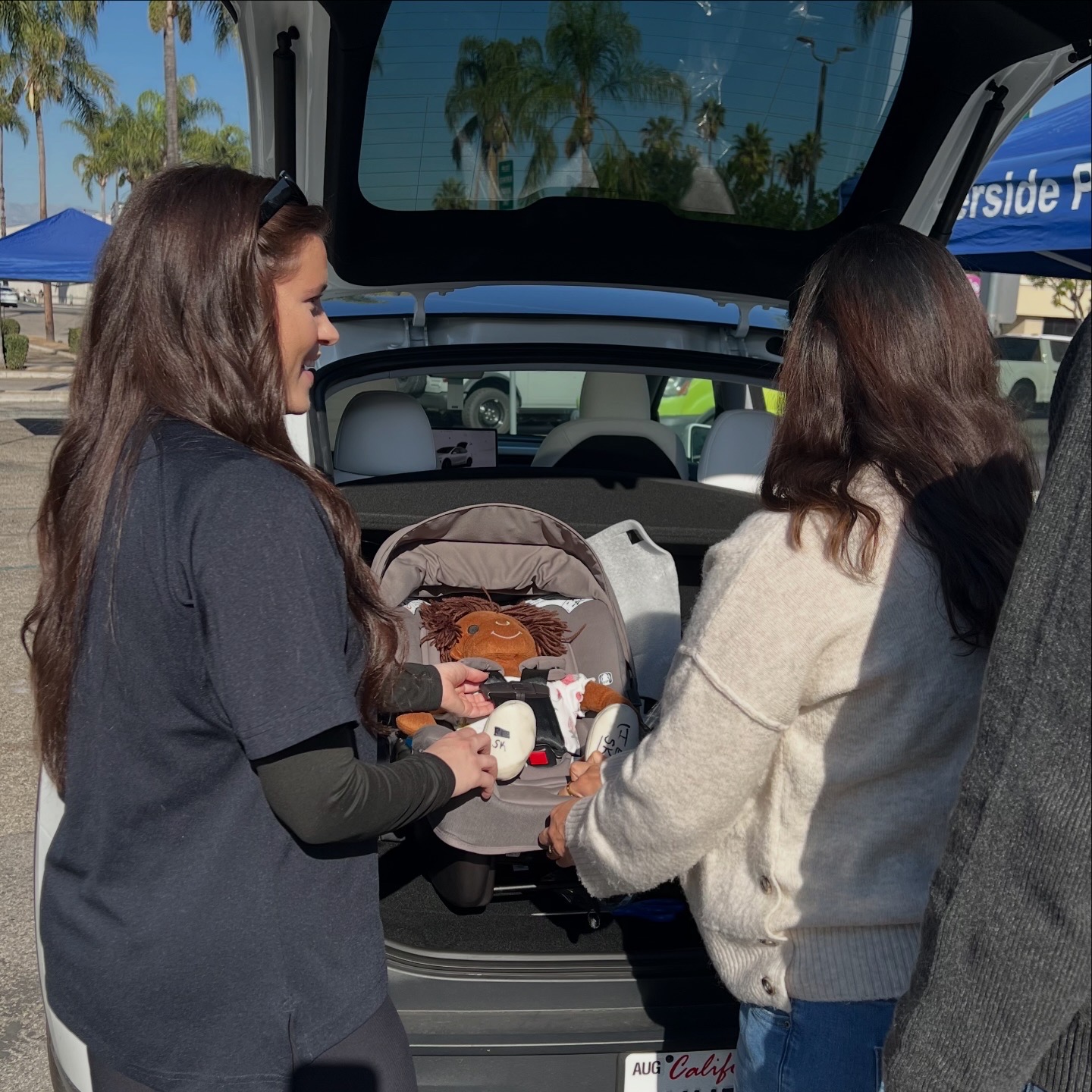
Car Seat Frequently Asked Questions
Current California Law:
- Children under 2 years of age shall ride in a rear-facing car seat unless the child weighs 40 or more pounds OR is 40 or more inches tall. The child shall be secured in a manner that complies with the height and weight limits specified by the manufacturer of the car seat. (California Vehicle Code Section 27360.)
- Children under the age of 8 must be secured in a car seat or booster seat in the back seat.
- Children who are 8 years of age OR have reached 4’9” in height may be secured by a booster seat, but at a minimum must be secured by a safety belt. (California Vehicle Code Section 27363.)
- Passengers who are 16 years of age and over are subject to California's Mandatory Seat Belt law.